



Most people who start training their pelvic floor stop before the month is out. Not because they lose interest, but because nobody explained how to organise it. A few squeezes on the sofa one random evening isn't a routine. A routine means knowing what you do, when you do it and keeping count.
That's what this guide is about: building a training habit you can keep up at home, with or without a device.
First, find the muscles
The pelvic floor is the group of muscles that closes off the bottom of the pelvis, like a hammock stretched between the pubic bone and the tailbone. To feel it, sit up straight, relax your glutes, stomach and thighs, and imagine you're trying to hold in wind. That sensation of closing and lifting inwards is what you're looking for.
A tip you'll hear a lot is to stop the flow when you pee. It can help once, to identify the muscles, but don't use it as an exercise. Training while you're on the toilet isn't a good idea.
If you can't feel anything or you're unsure, the sensible step is to see a physiotherapist who specialises in the pelvic floor. They'll show you how to do it properly from the start.
The basic structure of a session
A training session combines two kinds of work:
- Held contractions: squeeze, hold for a few seconds and relax for the same time or a little longer. At the start, 3 seconds of contraction and 3 of relaxation is a good place to begin.
- Quick contractions: squeeze and let go straight away, several times in a row.
Relaxing counts as much as squeezing. If you don't fully let go between repetitions, you're only doing half the exercise.
To get going, a session of 5 to 10 minutes is enough. What makes the difference isn't how long you train, it's how consistently.
When and where to train
The most common mistake is not having a set time. "I'll do it when I remember" turns into never. It works better if you tie it to something you already do every day: after your morning coffee, before bed, while the shower warms up.
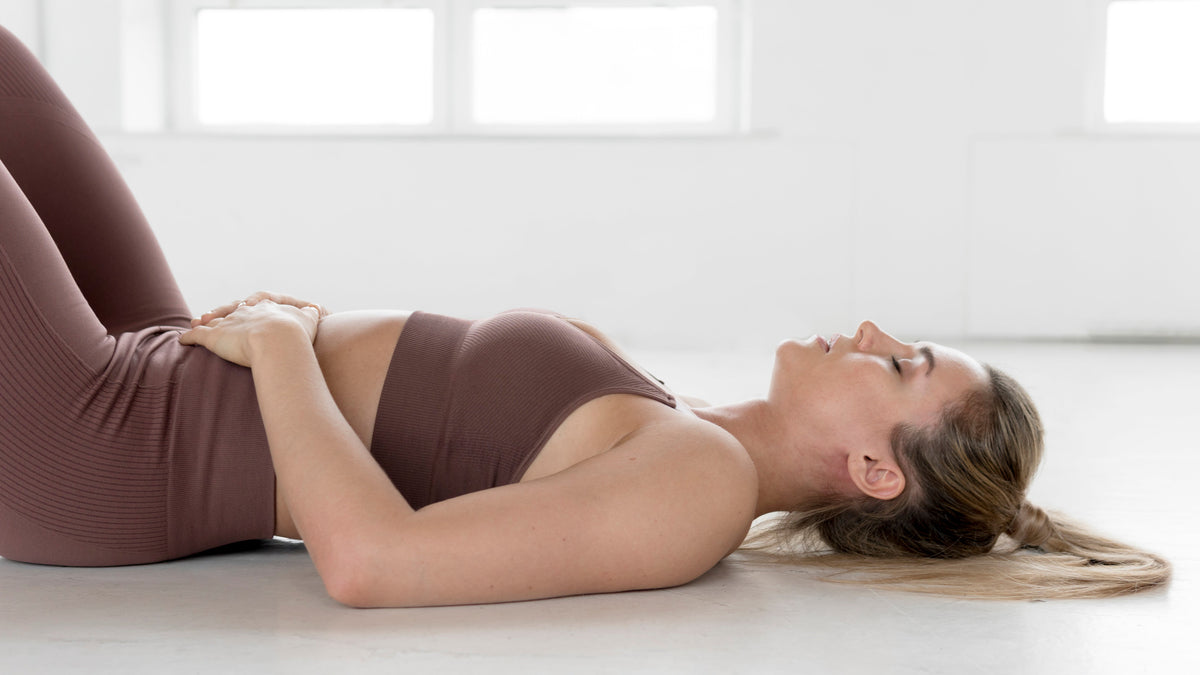
As for position, start lying on your back with your knees bent. That's where the rest of your body does the least work and it's easiest to focus. Once you've got the hang of it, move on to sitting and then standing.
An example week
This is a rough guide, not a personal plan. Adjust it to your own pace.
- Monday, Wednesday and Friday: 10 held contractions of 3 seconds, with 3 seconds of relaxation. One minute's rest. 10 quick contractions.
- Tuesday and Thursday: held contractions only, paying attention to relaxing fully between each one.
- Weekend: rest, or a short free session.
When the sequence feels comfortable, gradually lengthen the hold or change position. There's no rush.
How not to give up in week three
Pelvic floor training has one problem: you can't see what you're doing. There's no mirror to tell you whether the contraction was good or whether you relaxed properly. That's why so many people lose motivation.
This is where a trainer with a sensor and an app changes the experience. Kyra, for example, has a built-in pressure sensor that records every contraction and shows it in real time in the ActiveJoy® app. Training Mode guides you with 3 second intervals of contraction and relaxation, with a pressure bar on screen and the session time. Seeing what you're doing turns something abstract into something you can follow.
If you're not using a device, log your sessions in a note on your phone or on a calendar. Ticking off the days you've done is simple and it works.
What not to do
- Don't clench your glutes, stomach or thighs to compensate. The work happens inside.
- Don't hold your breath. Keep breathing normally throughout the session.
- Don't train if you feel pain or discomfort. Stop and ask a professional.
- Don't expect specific results within a set time. This is a training habit, not a treatment.
If you want to learn about the app's other features, there's a guide to ActiveJoy's control modes.
This article is for information only and does not replace an assessment by a health professional. If you have discomfort or questions about your pelvic floor, see a physiotherapist who specialises in the pelvic floor. Kyra is not a medical device.
Share:
How to Choose Your First Butt Plug: A Complete No-Myths Guide